
Product
Electrical Wires and Cables for Electrical Equipment
Low-voltage wires and cables for electrical equipment, industrial, and domestic applications — covering fixed wiring, flexible, installation, shielded, and automotive cables for systems rated up to 450/750V.

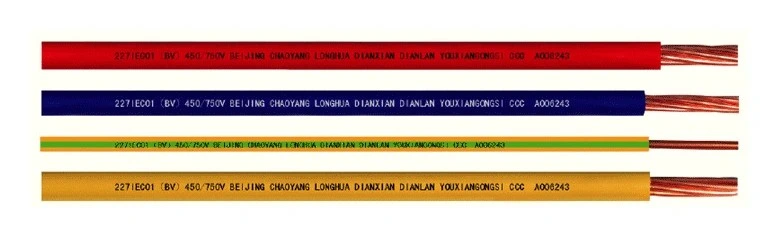


Product Types
Based on application and construction, products are grouped into six categories (model examples):
- Fixed wiring non-sheathed wires: BV (450/750V), BVR (450/750V), 227 IEC 01/02/05/06/07/08
- Fixed wiring sheathed cables: BVV, BLVV, BVVB, 227 IEC 10 (300/500V)
- Flexible connecting wires: RVS, RVV, 227 IEC 42 (RVB) (300/300V)
- Installation wires: AV, AV-90, AVR (300/300V)
- Shielded wires: AVP, RVP, RVVP (300/300V)
- Automotive low-voltage wires: QVR, QVR-105, AVS (Type I), AVSS (Type II), CAVUS (Type III)
Overview
This product range covers low-voltage electrical wires and cables for electrical equipment, industrial installations, and domestic applications. It includes fixed wiring cables, sheathed cables, flexible connection wires, installation wires, shielded cables, and automotive low-voltage cables.
Conductors are made of copper or aluminum with PVC or heat-resistant modified insulation materials, suitable for electrical systems with rated voltages of 300/300V, 300/500V, 450/750V and below, and compliant with relevant national and industry standards.
Key Capabilities
- Power and distribution systems
- Household appliances and small electric tools
- Instruments and control systems
- Lighting and electrical connections
- Internal wiring of industrial equipment
- Automotive and road vehicle low-voltage electrical systems
Standards
- GB 5023-1997
- JB 8734-1998
- JB/T 8139-1999
- JASO D611-94
- Relevant IEC standards (equivalent or referenced)
Compliant with applicable national and industry standards
Material & Safety Characteristics
- Long-term permissible conductor temperature: standard type 70°C; heat-resistant type 90°C
- Minimum installation temperature: 0°C
- Minimum bending radius: ≥ 4D for cable OD ≤ 25 mm; ≥ 6D for OD > 25 mm
- Excellent electrical, mechanical, and processing performance
Construction & Technical Performance
Construction
- Conductor: copper or aluminum, solid or stranded
- Insulation: PVC or heat-resistant PVC
- Sheath: PVC (for sheathed types)
- Shielding: tinned copper braid or wrap (for shielded types)
Key Electrical Characteristics
Depending on the model, the cable can be supplied with the following key technical parameters:
- Nominal cross-section: 0.08 mm² to 240 mm² (depending on type)
- DC conductor resistance: compliant with GB / IEC limits (refer to datasheet)
- Insulation resistance: meets minimum standard values at specified temperatures
- Continuous surface marking: model, rated voltage, manufacturer name
- Standard packing: coils or drums; customized colors and lengths available on request
Quality & Consistency
Manufactured under mature and stable production processes, the cables ensure consistent conductor performance, insulation quality, and construction reliability, meeting the safety and reliability requirements of industrial control systems.
Technical Specifications
Detailed specifications are available upon request. Please contact us for the full technical datasheet.